Wednesday, June 17, 2015

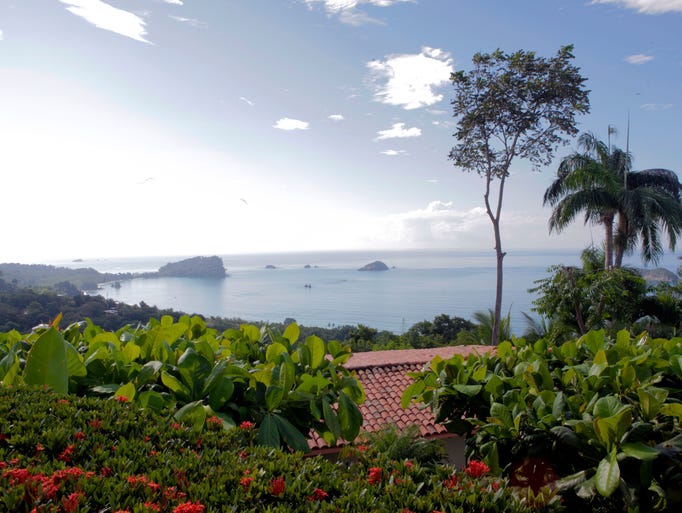
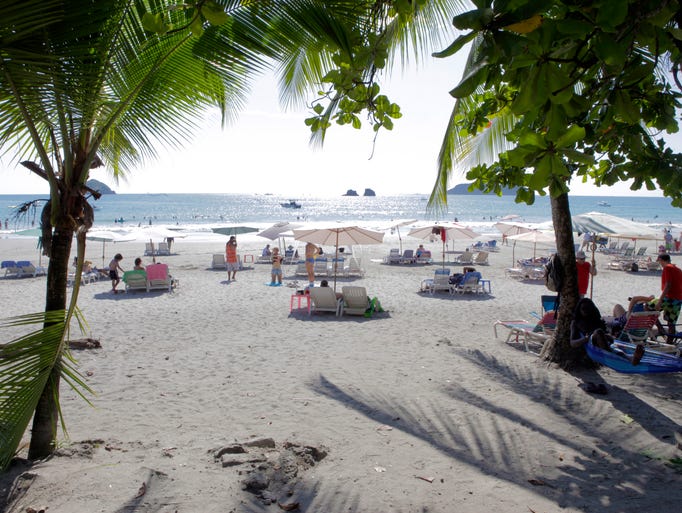
Manuel Antonio Beach and National Park


Easy adventure: Costa Rica's Manuel Antonio National Park

Monday, February 9, 2015

Wild myths: Costa Rican animal legends

 From The Tico Times:

 Wild myths: Costa Rican animal legends

Long before hordes of tourists and biologists began flocking to Costa Rica for its amazing biodiversity, the country’s native peoples were the area’s first wildlife experts. Through close observation during frequent close encounters with animals, Costa Rica’s indigenous populations built up extensive mythologies surrounding the country’s wildlife. These beliefs are best preserved among Costa Rica’s Bribrí and Boruca; animals feature prominently in their legends, healing ceremonies and even their dreams.
Creature clairvoyance
Shamans use the appearance of certain animals in dreams to predict the possible fate of the dreamer. A vulture (Cathartidae) in a dream signals that the dreamer is sick with a parasite, while a child who dreams of parrots (Psittacidae) will likely grow up to become a healer. A pregnant woman who dreams of a motmot (Momotidae) is likely to have a miscarriage.
Another traditional belief is that the traits of certain revered animals can be bestowed on children while they are still in the womb. Placing the right foot of a water opossum (Chironectes minimus) in the hut of a pregnant woman can ensure that the child will be born with greater fishing skills; doing the same with the claws of a northern tamandua (Tamandua mexicana) can endow a new baby with resilience.
Animals also play a significant role in beliefs about death. Both the common opossum (Didelphis marsupials) and the naked-tailed armadillo (Cabassous centralis) are seen by the the Bribrí people as harbingers of death. This belief is still embodied in the modern Spanish name of the naked-tailed armadillo, madillo zopilote, which means vulture armadillo. Another animal, the silky anteater (Cyclopes didactylus), is believed to carry the Bribrí’s souls to heaven.
Boruca painter Marvin González uses jaguars and other animals in many of his paintings due to their importance in the myths and culture of the Boruca people.
(Courtesy of Marvin González)
Creation
Usually depicted as scary and violent, a vampire bat (Phyllostomidae) is the unlikely hero of the Bribrí’s creation myth.
The story begins on an earth without soil or plants. Only rock and gravel covered the planet’s surface until a vampire bat flew into the center of the earth to feed off the blood of a baby jaguar (Panthera onca). With that nourishment, the bat was able to return to the earth’s surface and fertilize it. Using the guano left behind by the bat, the Bribrí god Sibú was able to plant the world’s first tree.
Spirit animals
Though many of the Boruca traditions have been lost over time, every year since the Spanish conquest, the Boruca have put on the Juego de los Diablitos (Little Devils’ Game), where the performers often dress in animal masks. Usually depicting strong animals, like the jaguar, or wise animals, like an owl or parrot, the masks represent the inner traits of the wearer.
Both Boruca and Bribrí legends also include the belief that certain animals on earth carry the spirit of gods.
In Boruca legends, quetzals (Pharomachrus mocinno) carry the spirit of the great warrior Satú. According to the legend, Satú was born to a great chief; on the day of his birth, a quetzal came down to the village to sing. As a tribute, the villagers made Satú a medallion shaped like a quetzal that would protect him. Satú was never hurt in battle while he wore the medallion; in battle, quetzals protect the Bocura. But one day in a fit of jealousy, Satú’s uncle stole the medallion while he slept. The next day, while Satú was unprotected, his uncle killed him in the forest, but a quetzal flew down and sat over Satú’s body, it then flew away to live in the mountains where it stayed forever, carrying Satú’s spirit.
The Bribrí people believe that all the world’s tapirs (Tapirus bairdii) are spirits of a tapir god, the sister of Sibú. Legend has it that Sibú planned to marry off his sister in exchange for a wife of his own, but because she can tell the future, Tapir could see her brother’s intentions and could also see that if she married, it would end unhappily. Tapir refused to get married, so her brother sent some of her spirit to earth for the Bribrí to hunt.
Because of their beliefs, Bribrís have extensive ceremonies surrounding tapir hunting. Only certain sects of Bribrís can hunt tapirs, and only one woman per village is trained to cook the animal properly. Any violations of the ritual will incur the wrath of the Tapir god.
“Into the Wild” is a monthly wildlife column from photojournalist Lindsay Fendt. Stay tuned each month for more glimpses into Costa Rica’s extraordinary biodiversit


Wednesday, February 4, 2015

Most Visited National Parks of Costa Rica

Costa Rica’s Six Most Popular National Parks

Peter Majerle | February 4, 2015

Taken from the Tico Times

Ballena National Marine Park. Andrés Madrigal/The TIco TImes
 Uvita en Ballena,


With nearly 2.5 million visitors in 2013 (the latest statistics available), Costa Rica’s diverse national parks system is the main reason many people travel here. Whether you’re looking for mountain landscapes, active volcanoes, virgin rainforests or white-sand beaches, you’ll find something in the country’s protected lands. Here are the six national parks that received the most visitors.

1    Poás Volcano National Park
Poás Volcano National Park. Andrés Madrigal/The TIco Times
Poás Volcano National Park. Andrés Madrigal/The Tico Times
Costa Rica’s most visited national park owes part of its popularity to its proximity to the urban centers of the Central Valley. But closeness itself is not reason enough to draw so many visitors. Poás Volcano, which sits at around 9,000 feet above sea level, boasts one of the largest craters on Earth. When the clouds lift, as happens often, the crater reveals a myriad of colors and delicate landscapes. Several safe trails snake throughout the park, leading to the emerald-colored Botos lagoon, which is an old crater. Poás has a new visitor’s center complete with museum, parking area, picnic area, and a small café.

2    Manuel Antonio National Park
Manuel Antionio National Park. Andrés Madrigal/The Tico TImes
Foreigners flock here for a chance to live a day in a postcard-like setting. Manuel Antonio National Park’s beaches are the epitome of tropical perfection, the kind of place where the only distractions from the crashing surf come from monkeys swinging in the palm trees.
Morning is the best time, for sunny skies and to avoid crowds (only 600 people are admitted during weekdays; 800 on weekends). Hike to the third beach within the park; it may be the most spectacular beach in Costa Rica, with verdant, coconut palm-lined white-sand shores. Check out the tombolo, which is a deposit of sand built up by millenniums of crashing waves, connecting an island with the mainland. A trail will take you to the top of Cathedral Point, offering spectacular vistas of surrounding beaches and cliffs. The trail is steep and muddy; take care and go with a partner.
Snorkeling is excellent, as is observation of sea life. Sponges, corals, various crustaceans, algae and fish all share the coast. Dolphins and whales sometimes frolic off the islands, and at low tide you can see ancient turtle traps set by the local indigenous population over a thousand years ago.

3    Irazú Volcano National Park
Irazú Volcano National Park. Andrés Madrigal/The TIco Times
Irazú Volcano National Park. Andrés Madrigal/The Tico Times
If you can beat the buses, which usually start to arrive around 8:00 a.m., you’ll have the entire park to yourself. After you park, head back towards the bus parking area to the observation point. If it’s early and the day is clear, you may be able to see the Caribbean and Pacific at the same time. The view is astounding.
Then head down and observe the craters. You’ll feel like you’re on another planet. The huge, ashy crater upon which you stand stands in stark contrast the Costa Rica’s green reputation, and the awesome potential power of the volcano makes anyone’s heart race. Check out the various craters: the main crater is a kilometer across and over a thousand feet deep.

4    Tortuguero National Park
Tortuguero National Park. Andrés Madrigal/The TIco TImes
Giant sea turtles nest on these beaches every year from March to mid-October. Of the world’s eight species of sea turtles, six nest in Costa Rica, four of which you can find in this park. But even if you don’t come for the turtles, there is still plenty to do. You can travel the main highways: canals lined with rainforest, teeming with wildlife. You’ll glide along on a placid waterway, the Caribbean just 100 meters away on one side, the rainforest on the other, where three species of monkeys (howler, spider and white-faced) dwell, as well as some 60 species of amphibians and 400 species of birds (including toucans and great green macaws).
If you do come for the turtles, the best time to see green turtles is from July to October, when the arribada brings in thousands of the reptiles en masse.

5    Cahuita National Park
Cahuita National Park. Andrés Madrigal/The Tico Times
A walk along this park’s easy-to-hike trails will almost certainly afford glimpses of local wildlife, including tropical birds, countless insects and, if you have a sharp eye, sloths and monkeys. Even if you don’t see the monkeys, you’ll probably hear them: that loud, bellowing call is from the howler monkey. The howler’s call can be heard more than a kilometer away – even through dense rainforest.
Not only does Cahuita have some of the country’s best swimming beaches, but it also boasts Costa Rica’s greatest living coral reef. Just off the shore (200 to 500 meters) is a living underwater habitat full of colorful tropical fish (over 120 species) and 35 species of coral. Snorkeling is good, especially during the dry season, but the clarity and quality has diminished in recent years due to runoff from banana plantations and silt caused by logging.

6    Ballena National Marine Park
Ballena National Marine Park. Andrés Madrigal/The Tico TImes
Time your visit to Ballena with the low tide and cross the river estuary, heading towards the tombolo on Punta Uvita, which is a natural sand bridge between the shore and an island. Here the beaches are a tepid 88 degrees, waves are minimal and the current won’t take you for a ride. Cut open some coconuts, have a drink, catch some rays and understand what Pura Vida really means.


Friday, January 30, 2015

La Fortuna, Arenal Volcano, and the Northern Plains

La Fortuna, Arenal Volcano, and the Northern Plains

Arenal Volcano.fronm the Tico Times 


With the spectacularly conical Arenal Volcano as its centerpiece, the Arenal region is one of Costa Rica’s most fascinating destinations. Interesting family-run establishments have popped up in recent years to serve the burgeoning tourism industry, and a community-improvement organization has turned the town’s central park into a veritable oasis.

Arenal Volcano, however, is what put the region on the map. Long known as Arenal Hill, an eruption in 1968 changed the region forever. Intense eruptions and volcanic activities continued for several days, killing 87 people and burying over 15 square kilometers in rock, lava and ashes. All in all, the eruptions affected a total of over 232 square kilometers in the surrounding area. Since then, Arenal Volcano has been almost constantly active, with activity ranging from silent emissions to rumbling explosions that send hot rocks into the air and lava pouring down the side of the volcano. The last major eruption, which led to temporary evacuations from hotels and nearby attractions, occurred in May 1998 but in the end didn’t present any real danger.

Arenal’s activity and quintessential conical shape offers most spectacular views and a daily pyrotechnics show that attracts visitors from around the globe. The volcano rises to approximately 1633 meters at its summits but due to its activity, its height changes frequently. If you are lucky and the weather permits it, you might get the chance to see the glowing lava at night.

While the volcano is without a doubt the area’s main attraction, there is no guarantee the weather will be clear enough to see it during your stay. However, with a wide range of excellent adventure activities, as well as the traditional hot springs, waterfalls and more, La Fortuna is a worthwhile destination and a must for any travel itinerary to Costa Rica. Nearby Caño Negro Wildlife Reserve is a great stop for nature lovers (especially birdwatchers) and Lake Arenal is another important nearby destination. There are boat cruises, wind surfing, fishing and more available on Costa Rica’s largest body of water.

All of these natural features have helped transform La Fortuna from an agricultural outpost into a thriving town. Several supermarkets, banks, filling stations and shops comprise this clean city. Travelers will enjoy the wide range of lodging and great restaurants throughout the town and region.


Monday, January 5, 2015

COSTA RICA VACATIONS : THE 5 BEST GUANACASTE BEACHES

COSTA RICA VACATIONS : THE 5 BEST GUANACASTE BEACHES


5 Best Guancaste Beaches 


Costa Rica Costa Of Living Update: Boogie Board—$80
Choosing your favorite beach in Costa Rica is like trying to pick which of your children you love the most. I’ve overheard heated debates on which sand is the softest, where the best snorkeling spot is located, or what surf is the easiest to boogie board without smacking your head into a rock.
Since many of you are visiting this area for the Christmas holiday—and are looking to get out of your resort and travel to different beaches—this list should help in planning your excursions. It’s best to fly into Liberia Costa Rica since this international airport is the closet to these Guanacaste beaches. The San Jose airport is five to six hours away from this area.
I’ve compiled this “happier beach list” (my top 5 Guanacaste beaches) by using a thorough investigative team: my husband and I. We are authorities in how to waste a day away. I can sit on a beach (in the shade) for and entire day and feel like it was well spent. Give me a book and I might never come home. Rob will stare into every tide pool looking for new and interesting sea life… and he always finds something. These beach days  clear my mind and help make me more appreciative of the little things. Gratitude comes easy when your toes are dipped into the warm waters of the Pacific Ocean.

see whole article in her blog here:

http://www.happierthanabillionaire.com/2014/12/12/costa-rica-vacations-5-guanacaste-beaches/

Wednesday, June 11, 2014

Natural wealth of Costa Rica

May 2014

Costa Rica's natural wealth makes it an attendee favorite

by Jeff Heilman

Had Christopher Columbus been a naturalist instead of a treasure hunter for Spain, he would have scored the ultimate prize in the “Rich Coast,” as he named his discovery of Costa Rica in 1502.
While less abundant in precious metals than Columbus expected, this Eden is the heart of Central America, with coastlines on the Caribbean Sea and Pacific Ocean, is an ecological gold mine.
In fact, within its 31,600 square miles, Costa Rica has 5 percent of the world’s biodiversity—an extraordinary concentration—making this peaceful nation one of the world’s premier adventure and ecotourism destinations. As Costa Rica CVB Executive Director Pablo Solano explains, this is just one facet of the appeal for groups.
“When choosing Costa Rica, you can also be sure that you have selected a destination with experience in successfully organizing, planning, marketing and realizing events,” Solano says. “Along with excellent services and infrastructure and myriad options for groups, we offer exceptional value, especially for meetings organized by U.S. companies. Under IRS rules, Costa Rica is considered part of the ‘North American Area,’ which allows U.S. delegates to deduct event-related expenses as they would back home.”
Investing in the Future
According to Solano, most meetings and conventions business comes from the pharmaceutical, automotive and insurance industries.
“Also active but less frequent are banking, medical, food industry, industrial products and scientific and conservation groups, along with universities and sport associations,” he says.
Raising its profile internationally is a strategic priority. Last year, Costa Rica concentrated its promotional and positioning efforts in the MICE arena, participating in five leading industry shows, including IMEX Frankfurt, IMEX Las Vegas and ICOMEX Mexico.
With tourism rising—Costa Rica expects 2.5 million visitors for 2014, an increase of 5 percent over 2013—the nation continues to bolster its competitive standing in the Central American and global markets with investment in new hotels and MICE facilities.
Central Stage
Bordered by Nicaragua to the north and Panama to the south, Costa Rica currently counts three major MICE zones: Central Valley, North Pacific and Central Pacific. As Costa Rica’s business and administrative center and most populous region, the fertile Central Valley, with the nation’s capital of San Jose at its heart, is the center of congressional action.
With airlift into busy Juan Santamaria International Airport, about 20 minutes west of downtown, historic San Jose is Costa Rica’s largest city. Backed by mountains, this bustling center, established in 1738 and capital since 1823, offers several quality conference hotels close to downtown and the airport.
The largest and most versatile property is the 230-room Wyndham San Jose Herradura Hotel & Convention Center. The hotel’s International Conference Center offers more than 28,300 square feet of event space.
With other leading properties including the 372-room Real InterContinental San Jose Costa Rica, offering 13 meeting rooms, and the luxurious Costa Rica Marriott Hotel San Jose, with 290 guest rooms, nine suites and more than 11,350 square feet of space, San Jose’s inventory keeps growing. At least seven new hotels opened over the last two years, including a 121-room Hyatt Place and the 172-room Sheraton San Jose.
Renowned for its museums and historic theaters, San Jose is a hotbed of Costa Rican culture, with standouts such as the National Theatre of Costa Rica, National Museum of Costa Rica and Museum of Pre-Columbian Gold.
Certain to elevate Costa Rica’s MICE appeal, construction plans are being finalized for The National Center for Meetings and Conventions of Costa Rica. Targeting a late 2015 opening, the 140,000-square-foot facility will be built about 20 minutes northwest of San Jose.
“With Costa Rica already well positioned for ecotourism, this project will expand our MICE services and offerings and help us compete internationally, while boosting the local economy and taking advantage of our high-quality hotel infrastructure,” Solano says.
As the Central Valley solidifies its MICE prowess, Costa Rica’s other main group destinations are also boosting their appeal.
Natural Exuberance
According to Solano, the North Pacific region, with fast-growing Liberia International Airport as its gateway, is a magnet for incentive groups. The main destination of Guanacaste literally bubbles with ecotourism and adventure opportunities.
Known as Costa Rica’s “sunny side” for its near-uninterrupted sunshine, Guanacaste is renowned for volcanos, hot springs and geysers.
Rich in flora, fauna and folklore, the region’s national parks, ranches, picturesque towns and golden beaches such as Papagayo create a true departure from the ordinary for groups.
Guanacaste’s hotel scene is also thriving. Joining local favorites such as Ocotal Beach Resort and international brands Four Seasons, Hilton, Westin and JW Marriott, the new 153-room Andaz Peninsula Papagayo is one of three openings over the past 18 months. Four more hotels slated for the region include the 447-room Dreams Las Mareas Resort & Spa Hotel, part of the massive Santa Elena Preserve tourism complex.
Around 90 minutes west of San Jose, the Central Pacific region is a haven of palm tree-lined beaches, clear blue waters and roaring rivers. Popular group activities include crocodile tours, sea kayaking, white-water rafting and tours of Tortuga (Turtle) Island.
Along with waterfront choices such as DoubleTree Resort by Hilton Central Pacific and Marriott Los Suenos, the area is home to the spectacular Villa Caletas, a lush and luxurious boutique property perched 1,100 feet above the Pacific Ocean.
Long time Meetings Focus contributor Jeff Heilman dreams in Costa Rican eco-green.